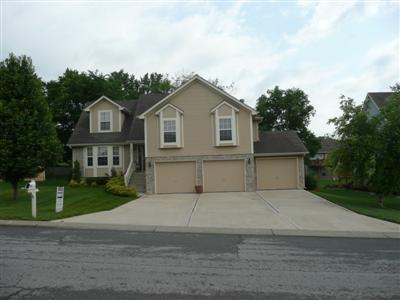
Inspection Report

Prepared For:
David Prospect

Property Address:
19268 E. 22nd Terrace
Independence, MO 64057

M3 Real Estate Inspection, LLC

David Moriconi, CRI
816.665.5346

www.m3inspect.com
david@m3inspect.com
Top Bottom
 
Date: 6/12/2008 Time: 09:30 AM Report ID: Sample report 6-2008

Property:
19268 E. 22nd Terrace
Independence, MO 64057
Customer:
David Prospect 816-235-7890
Real Estate Professional:
Bob Firstgold
Firstgold Realty 816-455-9908


Client Is Present:
Yes

Age Of Home:
6

Weather:
Clear

Temperature:
72

Rain in last 3 days:
Yes

Soil Condition:
Wet

House Faces:
South

Distribution of Seller/Owner's Disclosure Notice.:
The inspector was provided with a copy of the "Seller/Owner Disclosure Notice"

Radon Test:
No

Comment Key or Definitions

The following definitions of comment descriptions represent this inspection report. All comments by the inspector should be considered before purchasing this home. Any recommendations by the inspector to repair or replace suggests a second opinion or further inspection by a qualified contractor. All costs associated with further inspection fees and repair or replacement of item, component or unit should be considered before you purchase the property.

Inspected (IN) = I visually observed the item, component or unit and if no other comments were made then it appeared to be functioning as intended allowing for normal wear and tear.

Not Inspected (NI)= I did not inspect this item, component or unit and made no representations of whether or not it was functioning as intended and will state a reason for not inspecting.

Not Present (NP) = This item, component or unit is not in this home or building.

Evaluate, Repair or Replace (ER) = The item, component or unit is not functioning as intended or needs further inspection by a qualified contractor. Items, components or units that can be repaired to satisfactory condition may not need replacement

NOTE:  Inspections performed under the NAHI Standards exclude any item(s) concealed or not readily accessible to the Inspector. The Inspector is NOT required to move furniture, personal, or stored items; lift floor coverings: move attached wall, ceiling coverings, or panels; or perform any test(s) or procedure(s) which could damage or destroy the item(s) being evaluated.

The inspection and report are OPINIONS only, based upon visual observation of the existing conditions of the inspected property at time of inspection. THE REPORT IS NOT INTENDED TO BE, OR TO BE CONSTRUED AS A GUARANTEE, WARRANTY, OR ANY FORM OF INSURANCE. The Inspector will NOT be responsible for any repair or replacement with regard to the property or the condition thereof

NOTE: Attachments are included at the end of the report for your information. They should be read with the inspection report.

Top Bottom
 

General Summary


M3 Real Estate Inspection, LLC

816.665.5346

www.m3inspect.com
david@m3inspect.com

Customer
David Prospect

Address
19268 E. 22nd Terrace
Independence, MO 64057

The Summary is included as a convenience, not as a report substitute. It is essential that all portions of the home inspection report be read and carefully considered.

The following items or discoveries indicate that these systems or components do not function as intended or adversely affects the habitability of the dwelling; or appear to warrant further investigation by a specialist, or requires subsequent observation.

It is recommended that any deficiencies and the components/systems related to these deficiencies noted in the report be evaluated/inspected and repaired as needed by a licensed contractor/profession prior to closing. It is also recommended the entire system of noted deficiencies be evaluated prior to closing by the licensed contractor/professional for additional concerns that maybe outside our area of expertise or the scope of this inspection.

The entire Inspection Report, The NAHI Standards of Practice, and the M3 Real Estate Inspection Agreement must be carefully read to fully assess the findings of the inspection.

This summary shall not contain recommendations for routine upkeep of a system or component to keep it in proper functioning condition or recommendations to upgrade or enhance the function, efficiency, or safety of the home.

Home inspectors are not required to report on the following: Life expectancy of any component or system; The causes of the need for a repair; The methods, materials, and costs of corrections; The suitability of the property for any specialized use; Compliance or non-compliance with codes, ordinances, statutes, regulatory requirements or restrictions; The market value of the property or its marketability; The advisability or inadvisability of purchase of the property; Any component or system that was not observed; The presence or absence of pests such as wood damaging organisms, rodents, or insects; or Cosmetic items, underground items, or items not permanently installed. Home inspectors are not required to: Offer warranties or guarantees of any kind; Calculate the strength, adequacy, or efficiency of any system or component; Enter any area or perform any procedure that may damage the property or its components or be dangerous to the home inspector or other persons; Operate any system or component that is shut down or otherwise inoperable; Operate any system or component that does not respond to normal operating controls; Disturb insulation, move personal items, panels, furniture, equipment, plant life, soil, snow, ice, or debris that obstructs access or visibility; Determine the presence or absence of any suspected adverse environmental condition or hazardous substance, including but not limited to mold, toxins, carcinogens, noise, contaminants in the building or in soil, water, and air; Determine the effectiveness of any system installed to control or remove suspected hazardous substances; Predict future condition, including but not limited to failure of components; Since this report is provided for the specific benefit of the customer(s), secondary readers of this information should hire a licensed inspector to perform an inspection to meet their specific needs and to obtain current information concerning this property.

1.  KITCHEN & LAUNDRY
1.8   LAUNDRY / FIXTURES / HOOKUP
 
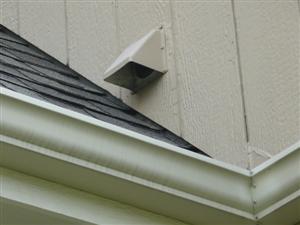
(1) Exterior dryer vent cover is damaged and needs repair it is lacking the sealing flap, also the vent pipe is clogged

2.  BATHROOMS
2.0   TOILET(S)
 
Tank water runs continuously and will not fill at LL . Have assessed by the plumber that checks the water heater
2.2   TUB(S) / SHOWER(S)
 
The whirlpool water pipes are leaking

4.  PLUMBING
4.5   WATER HEATER(S)
 
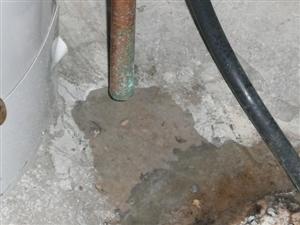
TPR valve leaks

Recommend a licensed and competent plumber of your choice assess and make needed repairs prior to the end of your inspection period.

5.  COOLING SYSTEMS
5.0   COOLING SYSTEM OPERATION
 
(2) The supply air was 64 degrees. When the supply air is 60 degrees or cooler the house will cool faster. Freon may need to be added.

6.  HEATING SYSTEMS
6.2   COMBUSTION AIR / VENTILATION
 
Inadequate combustion air source provided when the furnace room door is closed. I suggest adding larger vents in the wall to provide additional combustion air or undercutting the door.

7.  ELECTRICAL SYSTEMS
7.3   BRANCH WIRING
 
(1) GFCI appears defective at LL bath

10.  ROOFING
10.0   ROOF COVERINGS
 
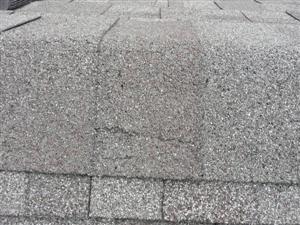
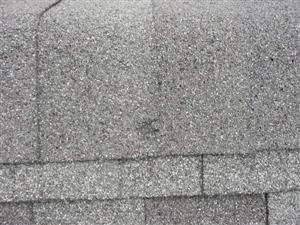
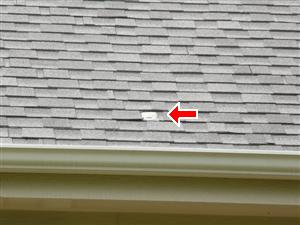
The roof has been visually inspected, by being walked on a portion and from the ground with binoculars, there  are nail pops, cracked ridge shingles, missing shingle and area that look like it was hit by hail.Roofs also often contain HIDDEN defects and if this is a cause for concern a qualified roofer should be brought in to determine if any such defects exists prior to the end of your inspection period.

11.  GROUNDS
11.4   GRADING / DRAINAGE
 
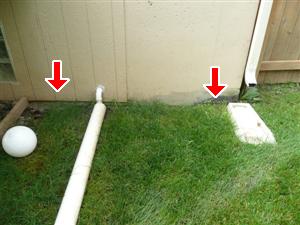
Signs of poor drainage such as at fireplace and other locations , management of positive drainage away from house is recommended to eliminate possible ( further) foundation problems. A slope of 1 inch per foot for the first 6-12 feet is ideal
11.5   WOOD DECKS / PORCHES / STAIRS / BALCONIES
 
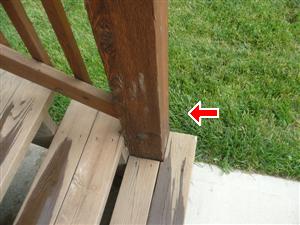
(2) Handrail and deck railing are loose and not properly secured. 

Top Bottom
1.  KITCHEN & LAUNDRY
EXCEEDING the NAHI standards the home inspector MAY observe and operate the basic functions of the following kitchen appliances: Permanently installed dishwasher, through its normal cycle; range, cook top, and permanently installed oven; trash compactor, garbage disposal, ventilation equipment or range hood. The home inspector is NOT required to observe: clocks, timers, self-cleaning oven function, or thermostats for calibration or automatic operation, non built-in appliances, or refrigeration units. The home inspector is NOT required to operate: appliances in use, or any appliance that is shut down or otherwise inoperable  NOTE: Laundry, plumbing, and electrical fixtures are not part of a visual inspection, but only noted to indicate their presence in the home.
 INNINPER
1.0 CABINETS / COUNTERTOPSX   
1.1 KITCHEN SINKX   
1.2 GARBAGE DISPOSALX   
1.3 RANGES / OVEN(S)X   
1.4 SEPARATE COOKTOP  X 
1.5 VENT / HOOD / EXHAUSTX   
1.6 DISHWASHERX   
1.7 KITCHEN ELECTRICALX   
1.8 LAUNDRY / FIXTURES / HOOKUP   X
IN=Inspected, NI=Not Inspected, NP=Not Present, ER=Evaluate, Repair or Replace
Styles & Materials
RANGE/OVEN:
ELECTRIC
ARE OUTLETS AT SINK GFCI PROTECTED:
YES
WASHER POWER SOURSE:
ELECTRIC
DRYER POWER SOURCE:
ELECTRIC
DRYER VENT:
PRESENT
Comments:
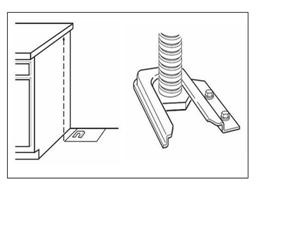
1.3 The oven/range does not have an "anti-tip" device attached as recommended by the manufacture for safety. The picture shows one style of an anti-tip bracket.
1.3 Picture 1
1.8 (1) Exterior dryer vent cover is damaged and needs repair it is lacking the sealing flap, also the vent pipe is clogged
1.8 Picture 1

(2) FYI - The laundry equipment is installed on a finished floor. Installing a watertight "drain pan" under the washer would be a beneficial improvement, to help prevent any moisture damages if the unit should leak.
Top Bottom
2.  BATHROOMS
 INNINPER
2.0 TOILET(S)   X
2.1 SINK(S) / VANITY(S)X   
2.2 TUB(S) / SHOWER(S)   X
2.3 ELECTRICALX   
2.4 VENTILATIONX   
2.5 HEAT SOURCEX   
2.6 FLOORSX   
IN=Inspected, NI=Not Inspected, NP=Not Present, ER=Evaluate, Repair or Replace
Styles & Materials
BATH with TUB and/or SHOWER:
2ND FLOOR HALL
LOWER LEVEL
BATH with WHIRLPOOL and SHOWER:
MASTER
1/2 BATH:
LOWER LEVEL
NUMNBER of BATH ROOMS:
3
Comments:
2.0 Tank water runs continuously and will not fill at LL . Have assessed by the plumber that checks the water heater
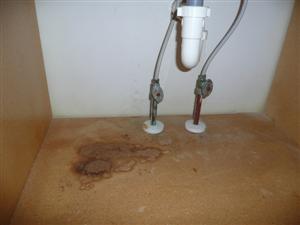
2.1 (1) Moisture stains under sink in hallway.
2.1 Picture 1

(2) Corrosion on plumbing components under the sink on 2nd floor

(3) Sink is MB is slow to drain
2.2 The whirlpool water pipes are leaking
2.6 a slope was noted in 1/2 bath
Top Bottom
3.  INTERIOR
According to NAHI Standards and Practices: The inspector will observe the visible condition of the surfaces of walls, ceilings, and floors. Verify the presence of steps, stairways, guardrails, hand rails, and observe the condition. Inspect the exterior condition of the kitchen countertops and kitchen cabinets. Describe type, material, condition and operation of a representative number of doors and windows. Observe the condition of fireplaces, dampers, fireboxes and hearths readily visible. Locate and observe a representative number of electrical outlets/fixtures and wiring in each room. Comment on presence or absence of smoke detectors. Observe condition and operation of plumbing fixtures and components in each room. The inspector is NOT required to: Ignite fires in a fireplace or stove to determine the adequacy of draft, perform a chimney smoke test, or inspect and solid fuel device in use. Evaluate the installation or adequacy of inserts, wood burning stoves, or other modifications in a fireplace, stove, or chimney. Determine clearance to combustibles in concealed areas. Determine cosmetic condition of ceilings, walls, floor coverings, and components. Determine if the bath and /or kitchen vent fan ducting exhausts air to the exterior of house. Inspect the central vacuum systems, the household appliances and recreational facilities, test or operate gas logs, built-in gas burning appliances, grills, stoves.


 INNINPER
3.0 EXTERIOR DOORSX   
3.1 INTERIOR DOORSX   
3.2 WINDOWSX   
3.3 INTERIOR WALLSX   
3.4 CEILINGSX   
3.5 FLOORSX   
3.6 INTERIOR STAIRS / HANDRAILS / BALCONIESX   
3.7 FIREPLACE(S)X   
3.8 MOLDX   
IN=Inspected, NI=Not Inspected, NP=Not Present, ER=Evaluate, Repair or Replace
Styles & Materials
WINDOW TYPE:
THERMAL PANE
VINYL
INTERIOR WALLS:
DRYWALL / PLASTER
INTERIOR CEILINGS:
DRYWALL / PLASTER
FIREPLACE TYPE:
METAL PREFAB
GAS LIGHTER
FIREPLACE (S):
ONE
Comments:
3.0 Screen doors / storm doors are not part of inspection
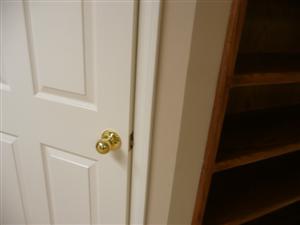
3.1 Some rub / won't latch such as in basement
3.1 Picture 1
3.2 (1) Screen / storm windows are not part of the inspection.

(2) There are thermal  sealed insulated windows installed throughout. Thermal seals have been known to fail which allows the insulated gases to escape and condensation to enter. It can be difficult to visually see this condensation effect until the temperatures indoors and outdoors create the condition for condensation. There were no signs at time of inspection that indicated the thermal seals have failed. Monitor in colder months.
3.3 Typical cracks such as in BR on 3rd floor.
3.3 Picture 1
3.4 Water stains on ceiling such as in the LR, they appear dry at time of  this inspection.
3.7 (1) This is a gas log fireplace Flues usually don't require cleaning, but since the flue is not fully visible, it should be checked by a certified chimney sweep for any type of blockage prior to first use.

(2) Check with the maker of the fireplace logs to see if 2 flex gas lines may be connected. Most manufactures do not allow this set up.
3.7 Picture 1
3.8 All homes contain some types of mold. Mold effects people differently. Some people have a higher tolerance to different mold types than do other people. If the buyer or family members are subject to allergies and adverse effects of mold a sampling of the HVAC airflow should be considered. This is a first step in determining air quality and mold levels in the home. M3 Real Estate Inspection, LLC is trained in Mold Assessment and can assist you.
Top Bottom
4.  PLUMBING
According to NAHI Standards and Practices: The inspector will: Identify material of the main line and water supply lines. Verify the presence of a main water line supply valve. Identify type of waste piping. Identify type and capacity of water heating units. Inspect the condition of accessible and visible water and waste lines. Inspect and operate fixtures and faucets. Inspect and operate the domestic hot water systems. Inspect and operate drain pumps and waste ejector when possible. Test water supply for functional flow. Test waste lines from sinks, tubs, and showers for functional flow. The inspector is NOT required to: Operate any main, branch or fixture valve, except faucets, or determine water temperature. Inspect any system that is shutdown or secured. Inspect any exterior plumbing components or interior or exterior drain systems. Inspect interior sprinkler systems. Evaluate the potability of any water supply. Inspect water-conditioning equipment, including softener and filter systems. Test shower pans, tub and shower surrounds or enclosures for leakage. Inspect gas supply system for materials installation or leakage. Evaluate the condition and operation of water wells and related pressure tanks and pumps: the quality or quantity of water from on-site water supplies: or the condition and operation of on-site sewage disposal systems such as cesspools, septic tanks, drain fields, related underground piping, conduit, cisterns, and equipment. Inspect and operate fixtures and faucets if the flow end of the faucet is connected to an appliance. Record location of any on-site visible fuel tanks within of directly adjacent to structure
 INNINPER
4.0 MAIN SUPPLY LINEX   
4.1 VISIBLE SUPPLY LINESX   
4.2 VISIBLE DRAIN / WASTE / VENT LINESX   
4.3 OUTSIDE HOSE FAUCETSX   
4.4 FUEL SYSTEMX   
4.5 WATER HEATER(S)   X
4.6 ADDITIONAL COMMENTSX   
IN=Inspected, NI=Not Inspected, NP=Not Present, ER=Evaluate, Repair or Replace
Styles & Materials
WATER SOURCE:
PUBLIC
WASTE DISPOSAL:
PUBLIC
WATER SUPPLY LINES:
COPPER
DRAIN / WASTE / VENT:
PLASTIC
WATER HEATER:
GAS
ESTIMATED SIZE:
50 GAL
ESTIMATED AGE:
5-10 YRS
Comments:
4.0 (1) Main valve located at basement
4.1 (1) The supply pipes are not fully visible due to finished areas, thus the supply pipes are not inspected in their entirety.


(2) Corrosion at pipe fittings recommend monitoring or have a competent plumber assess and advise prior to the end of your inspection period.


4.1 Picture 1
4.2 (1) The waste, drain, and vent pipes are not fully visible, thus they are not inspected in their entirety.

(2) Verifying free flowing sewer lines to the main sewer line and the functionality of floor drains and underground pipes which are beyond the scope of this inspection.
4.5 TPR valve leaks

Recommend a licensed and competent plumber of your choice assess and make needed repairs prior to the end of your inspection period.

4.5 Picture 1
4.6 Supply pipes and drain/waste/vent pipes were not fully visible/accessible and not inspected in their entirety. Any underground pipes are not part of our inspection. Verify that the drain/waste lines are free-flowing to the main sewer or septic tank
Top Bottom
5.  COOLING SYSTEMS
According to NAHI Standards and Practices: The inspector will: identify the type of central air conditioning system and energy sources. Operate the system using normal controls. Open access panels or covers provided by the manufacturer or installer, if readily accessible. Observe the condition of controls and operating components of the system, conditions permitting. Observe a representative number of the outlets in each habitual space in the house. The inspector is NOT required: Activate or operate cooling system or other systems that have been shut down. Inspect gas fired refrigeration systems, evaporative coolers, or wall or window-mounted air conditioning units, Check pressure of the system coolant or determine the pressure of leakage. Evaluate the capacity, efficiency, or adequacy of the system. Operate equipment or systems if exterior temperature is below 65 degrees Fahrenheit or when other circumstances are not conducive to safe operation or may damage equipment. Remove covers or panels that are not readily accessible. Dismantle any equipment, controls, or gauges. Check the electric draw by the unit. Operate digital-type thermostats or controls
 INNINPER
5.0 COOLING SYSTEM OPERATION   X
5.1 COOLING SYSTEM CONTROLSX   
5.2 DISTRIBUTIONX   
5.3 WHOLE HOUSE FANS  X 
5.4 CEILING FANSX   
5.5 RECOMMENDATIONX   
IN=Inspected, NI=Not Inspected, NP=Not Present, ER=Evaluate, Repair or Replace
Styles & Materials
COOLING EQUIPMENT TYPE:
CENTRAL A/C
FUEL SOURCE:
ELECTRIC SPLIT SYSTEM
NUMBER OF A/C UNITS:
ONE
ESTIMATED SIZE:
3-4 TON
ESTIMATED AGE:
5-10 YRS
Comments:
5.0 (1) HVAC filters should be cleaned or replaced every 30-45 days.

(2) The supply air was 64 degrees. When the supply air is 60 degrees or cooler the house will cool faster. Freon may need to be added.
5.5 Have a competent HVAC contractor read the report; review the system; then correct any defects prior to the end of your inspection period.
Top Bottom
6.  HEATING SYSTEMS
According to NAHI Standards and Practices: The inspector will: Identify the type of fuel, heating equipment, and heating distribution system. Operate the system using normal control devices to determine function. Open access panels or covers provided by manufacture or installer, if readily detachable. Observe the condition of normally operated controls and components of the system. Observe visible flue pipes, dampers and related components for safe operation. Observe the condition of a representative number of heat sources in each habitable space of the house. Inspect the installation and operation of fixed supplementary heat units. The inspector is NOT required to: Activate or operate heating or other systems that do not respond to normal controls or have been shut down. To inspect or evaluate a heat exchanger. Inspect equipment or remove covers or panels that are not readily accessible. Dismantle any equipment, controls, or gauges. Inspect the interior of chimney flue, interior of vent, or interior of ducts. Inspect heating systems accessories, such as humidifiers, air purifiers, motorized dampers, heat recliners, etc. Inspect solar heating systems. Activate heating, heat pump systems(> 65 degrees) or other systems when ambient temperatures or other circumstances are not conducive to safe operation or may damage the equipment. Evaluate the type of material contained in insulation and /or wrapping of pipes, ducts, jackets, and boilers. Operate digital-type thermostats or controls. Evaluate the capacity, adequacy, or efficiency of a heating or cooling system. Test a operate gas logs, built-in gas burning appliances, grills, stoves, space heaters, or solar heating devices. Determine clearance to combustibles or adequacy of combustion air.
 INNINPER
6.0 HEATING SYSTEM OPERATIONX   
6.1 HEATING SYSTEM CONTROLSX   
6.2 COMBUSTION AIR / VENTILATION   X
6.3 AIR FILTERSX   
IN=Inspected, NI=Not Inspected, NP=Not Present, ER=Evaluate, Repair or Replace
Styles & Materials
HEAT TYPE:
FORCED AIR
FUEL:
GAS
DISTRIBUTION:
DUCTS
NUMBER OF FURNACES (excluding wood):
ONE
ESTIMATED SIZE:
90000-100000 BTU
ESTIMATED AGE:
5-10 YRS
Comments:
6.0 The furnace responded to the controls to produce heat. This is a newer closed system with restricted access and limited visibility-these conditions do not allow inspection of the heat exchanger. Suggest annual normal maintenance.
6.2 Inadequate combustion air source provided when the furnace room door is closed. I suggest adding larger vents in the wall to provide additional combustion air or undercutting the door.
6.3 HVAC filters should be cleaned or replaced every 30-45 days.
Top Bottom
7.  ELECTRICAL SYSTEMS
According to NAHI Standards and Practices: The inspector will: Identify type and location of primary service (overhead or underground), voltage, amperage, and over current protection devices (fuses or breakers). Observe the existence of a connected grounding conductor when readily accessible. Inspect the main and branch circuit conductors for proper over current protection and condition by visual observation after removal of the readily accessible panel cover. Determine presence of aluminum branch circuit wiring at the main and sub panels. Test and / or verify operation of a representative number of accessible switches, receptacles and light fixtures. Test and / or verify grounding and polarity of a representative of receptacles in proximity to plumbing fixtures or on the exterior. Verify operation of GFCI if present. Observe the general condition of visible branch circuit conductors that may constitute a hazard to the occupant or the structure by a reason of improper use or installation of electrical components. The inspector is NOT required to: insert any tool, probe or testing device into the main or sub-panels. Activate electrical systems or branch circuits, which are not energized. Operate overload protection devices. Inspect ancillary systems, including but not limited to: burglar alarms, home protection systems, low voltage relays, smoke/heat detectors, antennas, electrical de-icing tapes, sprinkler wiring, swimming pool wiring, or any system controlled by a timer. Move any object, furniture, or appliance to gain access to any electrical component. Test every switch, receptacle, and fixture. Remove switch and outlet cover plates. Inspect electrical equipment not readily accessible or dismantle any electrical device or control. Verify continuity of connected service ground(s)..
 INNINPER
7.0 SERVICE ENTRANCEX   
7.1 MAIN PANELX   
7.2 SUB-PANEL  X 
7.3 BRANCH WIRING   X
7.4 DOORBELLX   
7.5 SMOKE DETECTORSX   
IN=Inspected, NI=Not Inspected, NP=Not Present, ER=Evaluate, Repair or Replace
Styles & Materials
SERVICE ENTRANCE:
UNDERGROUND
SIZE OF SERVICE:
200 AMP
SUB PANEL:
NO
MAIN DISCONNECT:
BREAKERS
MAIN CABLE:
ALUMINUM
BRANCH WIRE 120 VOLT:
COPPER
BRANCH WIRE 240 VOLT:
COPPER
MAIN GROUNDING:
WATER PIPE
WIRING METHODS:
3-PRONG OUTLETS
ROMEX
Comments:
7.3 (1) GFCI appears defective at LL bath

(2) Once an acceptable practice, open incandescent light fixtures are not allowed in closets on new construction, an enclosed or flush mounted fixture is recommended upgrade.  I recommend this incandescent light should be enclosed and maintain 12 inch clearance to combustibles as a safety upgrade.


7.3 Picture 1
7.5 (1) Smoke detector(s) are checked for presence only. Recommend testing on a regular basis and , if needed or required change the batteries

(2) Missing and/or Removed
7.5 Picture 1
Top Bottom
8.  FOUNDATION
According to NAHI Standards and Practices: The inspector will: identify the type of structure and material comprising the structure, observe the condition and serviceability of visible exposed areas of foundation walls, grade slab, bearing walls, posts, piers, beams, joist, trusses, subfloors, chimney foundations, stairs and other similar structural components. Inspect foundation for indications of flooding, moisture, or water penetration. Observe the sump pump when present. Inspect visible condition of the floor slap when present. The inspector is NOT required to: enter subfloor crawl spaces with headroom less than 3 feet, obstructions, or other detrimental conditions that would make it unsafe for the inspector. Move stored items or debris or perform excavation to gain access. Enter areas, in which the inspector's opinion, may contain conditions or materials hazardous to the health and safety of the Inspector. Operate sump pumps equipped with internal / water dependent switches
 INNINPER
8.0 VISIBLE FOUNDATION WALLS X  
8.1 VISIBLE FOUNDATION FLOORS X  
8.2 VISIBLE SUB-FLOOR / WALL FRAMING X  
8.3 VISIBLE BEAMS X  
8.4 WATER ENTRYX   
8.5 SUMP PUMP X  
IN=Inspected, NI=Not Inspected, NP=Not Present, ER=Evaluate, Repair or Replace
Styles & Materials
FOUNDATION TYPE:
BASEMENT
FOUNDATION WALLS:
CONCRETE
FOUNDATION FLOOR:
CONCRETE
SUB FLOOR SYSTEM:
2 X 10
WOOD JOISTS
VISIBLE SUPPORT COLUMNS:
NOT VISIBLE
Comments:
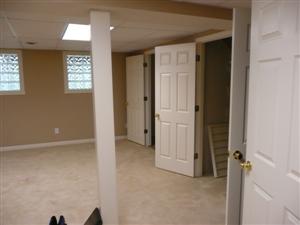
8.0 (1) Correcting and / or maintaining grade issues is important in helping eliminate or minimize future / additional foundation damage.

(2) At least 99% of the foundation walls, floor slabs and structural support components in the finished basement are covered with finished surfaces and/or personal storage and furnishings and were not visible at the time of our examination. This limits both our inspection and the visible conditions.

 We did not observe any conditions that in the inspectors opinion are significant defects at the time of the inspection. However there is always a possibility that there are structural defects, environmental issues or pest activity or adverse conditions present at hidden or concealed areas. We know nothing of the presence or absence of defects at these areas. If this is a concern to the buyer, we recommend that they have further evaluation by a specialist prior to the end of your inspection period or close. The inspection company can not be held liable for Hidden or Concealed damage
8.0 Picture 1
8.1 At least 99 % of the concrete slab is not visible due to floor covering. The inspector was not able to check entire area for cracking. It is possible that shrinkage cracks and cold joint separations, or other problems could exist beneath the floor covering. Refer to comment 8.0-2
8.1 Picture 1
8.1 Picture 2
8.2 At least 99 % the walls and ceiling in the finished basement are covered and are not visible. We did not observe any conditions that in the inspectors opinion are significant defects at the time of the inspection. However there is always a possibility that there are structural defects, environmental issues or pest activity or adverse conditions present at hidden or concealed areas. We know nothing of the presence or absence of defects at these areas. If this is a concern to the buyer, we recommend that they have further evaluation by a specialist prior to the end of your inspection period or close.The inspection company can not be held liable for Hidden or Concealed damage
8.3 (1) Finished ceilings do not allow a visual inspection. The inspection company can not be held liable for Hidden or Concealed damage.

(2) Finished ceilings do not allow a compete visual inspection. Only a portion was inspected. The inspection company can not be held liable for Hidden or Concealed damage.
8.4 No active moisture leaks noted at time of inspection
8.5 Panel could not be removed. The panel has existing damage
8.5 Picture 1
8.5 Picture 2
Top Bottom
9.  GARAGE & ATTIC
According to NAHI Standards and Practices: The inspector will: Identify type and material of door(s). Observe the condition and function of listed components; electric, plumbing, heating. Inspect vehicle doors for type, general condition, and intended function by manual operation or by use of permanently affixed opener(s). The inspector is NOT required to: Verify or certify safe operation of any auto reverse or related safety function(s) of a vehicle door. The inspector will: Determine the presence of attic insulation and its approximate thickness, investigate evidence of the presence of water penetration. Describe material comprising the roof structure in the visible attic area. Observe the condition of the visible roof structure and attic components where readily and safely accessible. Investigate evidence of the presence of water penetration where accessibly. The inspector is NOT required to: Enter attic spaces with headroom of less than 5 feet, with insulation covering the ceiling joist, or bottom truss cord, or if there are obstructions, trusses, or other detrimental conditions. Break or otherwise damage the surface finish or weather seal on and around access panels and covers
 INNINPER
9.0 GARAGE ROOFX   
9.1 GARAGE FLOOR / FOOTINGSX   
9.2 GARAGE WALLS / CEILINGX   
9.3 HOUSE DOOR / EXTERIOR DOORX   
9.4 VEHICLE DOOR(S)X   
9.5 GARAGE ELECTRICALX   
9.6 ATTIC CAVITYX   
IN=Inspected, NI=Not Inspected, NP=Not Present, ER=Evaluate, Repair or Replace
Styles & Materials
GARAGE STYLE:
ATTACHED
GARAGE DOOR MATERIAL:
HARDBOARD
GARAGE TYPE:
THREE AUTOMATIC
ROOF COVERINGS:
SAME AS HOUSE
GARAGE ROOF / CEILING:
RAFTERS / JOISTS /TRUSSES
ATTIC DESCRIPTION:
MULTIPLE
ATTIC INSPECTED BY:
VIEWED FROM ACCESS
NO SECURE / SOLID WALKWAY
ROOF / CEILING FRAME:
RAFTERS& JOISTS
INSULATION:
LOOSE
BATT
INSULATION DEPTH:
8 to 14 INCHES +/-
Comments:
9.0 Same as house see "ROOFING SECTION"
9.1 Typical cracks
9.4 The reversing sensing eyes should be mounted between 4 and 6 inches from the floor these are higher than that ( 3rd garage door).
9.4 Picture 1
9.5 Extension cord should not be used for permanent wiring
9.5 Picture 1
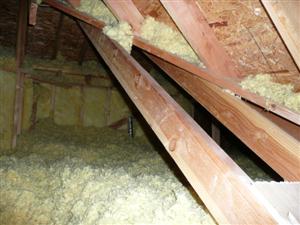
9.6 (1) View of the garage area.
9.6 Picture 1

(2) Not able to inspect entire attic due to lack of access / lack of a safe walking platform

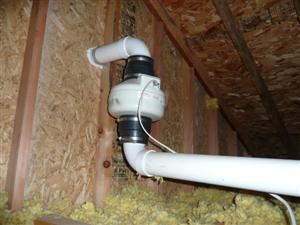
(3) A Radon mitigation system is installed in the house
9.6 Picture 2

(4) View of the house section
9.6 Picture 3
9.6 Picture 4

(5) Not able to inspect entire attic due to lack of access / lack of a safe walking platform
Top Bottom
10.  ROOFING
According to NAHI Standards and Practices: The inspector will: Describe the type of roofing and gutters. Observe the condition of visible roof material, rain gutter, and downspout systems, visible portions of roof flashings, roof soffits and fascias, roof vents, skylights and other roof accessories from the exterior. If possible, inspect the roof surface and components from arm length distance or with binoculars from the ground. Inspect flat roofs where internal accessibility is readily and safely available. Report presence of roof ventilation The inspector is NOT required to: Walk on or access a roof where it could damage the roof or roofing materials or be unsafe for the inspector. Remove snow, ice, debris or other conditions that prohibit the observation of the roof surfaces. Inspect internal gutter and downspout systems and related underground drainage piping. Inspect antennas, lightning arresters, or similar attachments. Operate powered roof ventilators. Determine remaining life expectancy of roof coverings, presence or absence of hail damage; manufacture's defects, exceptions, installation methods or recalls; or number of layers. Determine adequacy of roof ventilation. Inspect interior of the chimney flues or determine the presence or absence of flu liner.
 INNINPER
10.0 ROOF COVERINGS   X
10.1 EXPOSED FLASHINGSX   
10.2 CHIMNEY FLASHINGSX   
10.3 PLUMBING VENT / ROOF PENETRATIONSX   
10.4 SKYLIGHT(S)  X 
10.5 GUTTERS AND DOWNSPOUTSX   
IN=Inspected, NI=Not Inspected, NP=Not Present, ER=Evaluate, Repair or Replace
Styles & Materials
ROOF TYPE:
GABLE
HIP
COMBINATION
ROOF COVERING& LAYERS:
COMPOSITION SHINGLES
1 LAYER
ROOF SLOPE:
STEEP
ROOF VENTILATION:
SOFFIT
ROOF VENTS
ROOF INSPECTED BY:
WALKED ON ROOF
LADDER
GROUND
BINOCULARS (inspection is limited)
GUTTER TYPE:
FULL
METAL
SKY LIGHT (S):
NONE
Comments:
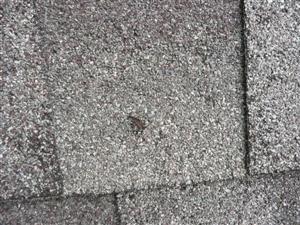
10.0 The roof has been visually inspected, by being walked on a portion and from the ground with binoculars, there  are nail pops, cracked ridge shingles, missing shingle and area that look like it was hit by hail.Roofs also often contain HIDDEN defects and if this is a cause for concern a qualified roofer should be brought in to determine if any such defects exists prior to the end of your inspection period.
10.0 Picture 1
10.0 Picture 2
10.0 Picture 3
10.0 Picture 4
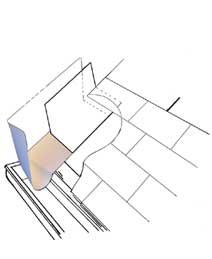
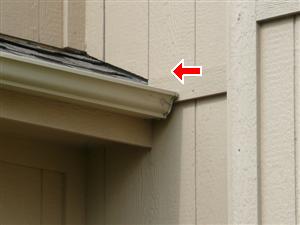
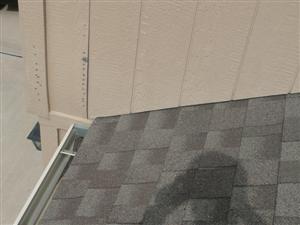
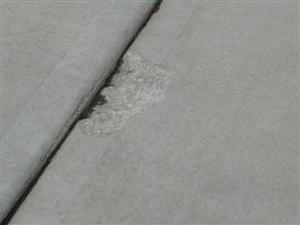
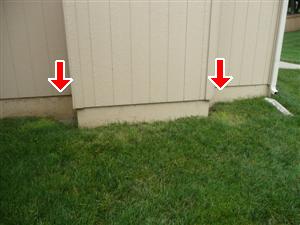
10.1 Kick-Out flashing not used at time of building where gutters meet siding or at roofing intersections . Kick-Out flashing direct water away from siding and possible siding moisture damage. See photos for sample types
10.1 Picture 1
10.1 Picture 2
10.1 Picture 3
10.5 Route downspouts further away from house.
Top Bottom
11.  GROUNDS
According to NAHI Standards and Practices. The inspector will describe material and inspect the condition of the driveway, walkways, grades, steps, patios, and other contiguous with the inspected structure. Will observe the drainage, grading and vegetation for conditions that adversely affect the structure. The inspector is NOT required to: Inspect buildings, decks, patios, retaining walls, and other structures detached from the house. Inspect fences or privacy walls. Evaluate the condition of trees, shrubs, and or other vegetation. Evaluate or determine soil or geological conditions, site engineering, or property boundaries
 INNINPER
11.0 DRIVEWAYX   
11.1 MASONRY PORCHES / STOOPS / STEPSX   
11.2 RETAINING WALLS  X 
11.3 PATIO / SLABX   
11.4 GRADING / DRAINAGE   X
11.5 WOOD DECKS / PORCHES / STAIRS / BALCONIES   X
11.6 VEGETATIONX   
IN=Inspected, NI=Not Inspected, NP=Not Present, ER=Evaluate, Repair or Replace
Styles & Materials
DRIVEWAY TYPE:
CONCRETE
SIDEWALKS:
N/A
PORCH / STOOP / STEPS:
CONCRETE
RETAINING WALL:
N/A
PATIO TYPE:
CONCRETE
DECK / BALCONY:
WOOD
Comments:
11.0 Typical damage or deterioration such as: cracks, settlement, movement, or spalling was noted at the surface of the driveway.

Trip hazards
11.0 Picture 1
11.3 Typical cracks
11.4 Signs of poor drainage such as at fireplace and other locations , management of positive drainage away from house is recommended to eliminate possible ( further) foundation problems. A slope of 1 inch per foot for the first 6-12 feet is ideal
11.4 Picture 1
11.4 Picture 2
11.5 (1) Deck boards have some curling

(2) Handrail and deck railing are loose and not properly secured. 
11.5 Picture 1

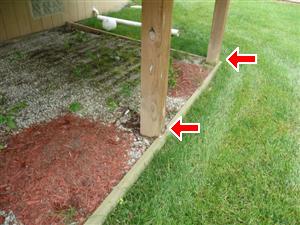
(3) Ground contact visible at post, this can cause premature wood rot. The presence or absence of footings is not part of this inspection.
11.5 Picture 2
Top Bottom
12.  EXTERIOR
According to NAHI Standards and Practices: The inspector will: Identify the type and material comprising the exterior components inspected. Observe the condition of the components from the ground level.
Observe the condition of a representative number of visible windows and doors. Inspect attached porches, decks, steps, balconies, handrails, guardrails, and carports. The inspector is NOT required to: Inspect buildings, decks, patios, retaining walls, and other structures detached from the house. Evaluate function of shutters, awnings, storm doors, storm windows, and similar accessories. Inspect or test the operation of security locks, devices, or systems. Evaluate the presence, extent, and type of insulation and vapor barriers in the exterior walls. Examine the interior of the chimney flues or determine the presence or absence of flu liners. Inspect for safety type glass or the integrity of thermal window seals or damaged glass.
 INNINPER
12.0 EXTERIOR FOUNDATIONX   
12.1 WALL COVERINGX   
12.2 TRIM / SOFFIT / FASCIAX   
12.3 CHIMNEY(S)X   
IN=Inspected, NI=Not Inspected, NP=Not Present, ER=Evaluate, Repair or Replace
Styles & Materials
EXTERIOR WALLS:
WOOD FRAME
WALL COVERING:
FIBROUS HARBOARD
STONE VENEER
EXTERIOR TRIM:
FIBORUS HARDBOARD
CHIMNEY TYPE:
FIBOROUS CHASE
Comments:
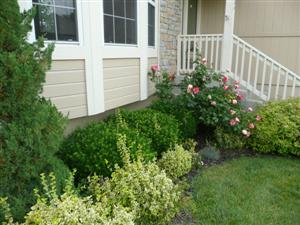
12.0 Foliage obstructs visibility
12.0 Picture 1
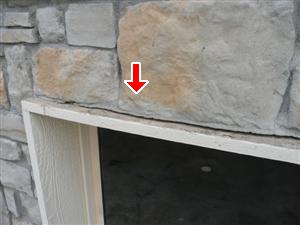
12.1 (1) There were no obvious weep (drain) holes observed in the stone veneer walls ( this practice is common to our area)

There were no weep holes present at the bottom of the masonry veneer walls. Although the local building codes don't exempt them NOR require builders to install them, our building code requires they be present. If water should get behind OR through the brick which is a porous material, weep holes can provide the moisture a way out of the wall cavity".

"Without this exit point, water can be trapped inside the wall cavity forming mold, mildew or causing hidden moisture damage, etc. This company did not perform intrusive testing for these conditions, and have no ability to verify the absence or presence of defective conditions inside wall cavities. We recommend having further intrusive moisture testing, damage assessment and mold testing of all wall cavities performed prior to leaving your inspection contingency period".

"We also recommend having a licensed and competent brick mason retrofit all exterior walls with proper weep holes per a licensed architects design".


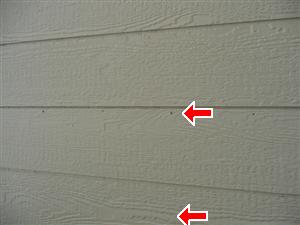
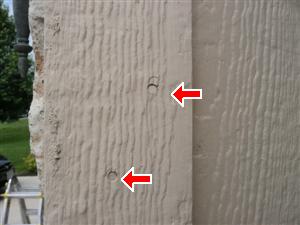
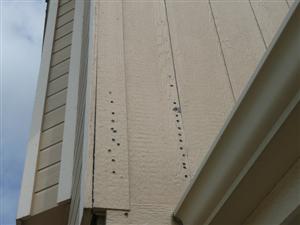
(2) Multiple fasteners used on siding and trim, which is not normal. Consult with the seller as to the purpose and reason.

Gaps and overdriven fasteners should be caulked to eliminate possible moisture penetration, found on all sides of the home.
12.1 Picture 1
12.1 Picture 2
12.1 Picture 3
12.2 (1) Flashing not used over door(s). This could set up a premature moisture rot situation
12.2 Picture 1

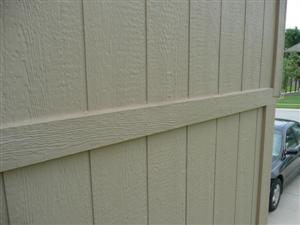
(2) Regular maintenance needed for trim boards installed like this one without metal flashing. Keep painted and caulk joint intact
12.2 Picture 2
12.3 Although we attempt to determine if they are dirty or not, most flues are not fully visible and are therefore not inspected during a visual home inspection. We recommend having them checked prior to the end of your inspection period by a competent CSIA chimney sweep prior to the end of your inspection period.
Top Bottom
 
  INVOICE

M3 Real Estate Inspection, LLC
816.665.5346

www.m3inspect.com
david@m3inspect.com
Inspected By:  David Moriconi, CRI
Inspection Date: 6/12/2008
Report ID: Sample report 6-2008

Customer Info: Inspection Property:
David Prospect
2269 SH 43 North
Jefferson TX 75657

816-235-7890

Customer's Real Estate Professional:
Bob Firstgold
Firstgold Realty  
19268 E. 22nd Terrace
Independence, MO 64057
 

Inspection Fee:

ServicePriceAmountSub-Total
Inspection Service 315.00 1 315.00
Termite Inspection 65.00 1 65.00

Tax $0.00
Total Price $380.00

Payment Method:Check
Payment Status:Paid At Time Of Inspection
Note:

Top Bottom
 

M3 Real Estate Inspection, LLC

816.665.5346

www.m3inspect.com
david@m3inspect.com

Report Attachments

ATTENTION: This inspection report is incomplete without reading the information included herein at these links/attachments. Note If you received a printed version of this page and did not receive a copy of the report through the internet please contact your inspector for a printed copy of the attachments

Link to NAHI Standards of Practice

Component Life Spans

Pre-Closing Checklist

Termite Report

Top Bottom